
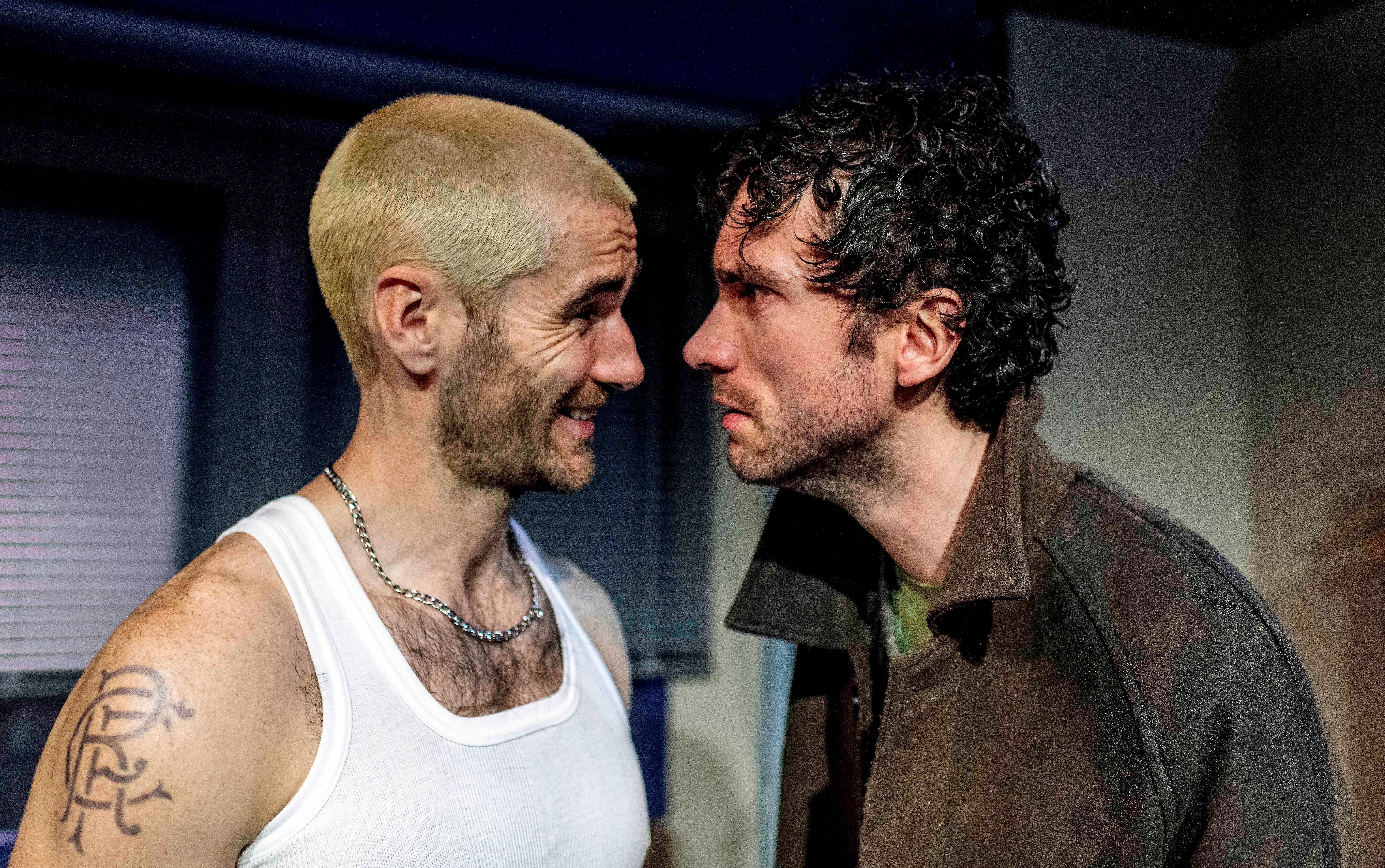
Hurtling through the 70 minute run-time, director Harry Burton keeps David Ireland’s darkly comic script slick and sparking, yet still giving perfect amounts of breathing room for the tense physical language between actors Matthew Blaney and Robbie Martin.
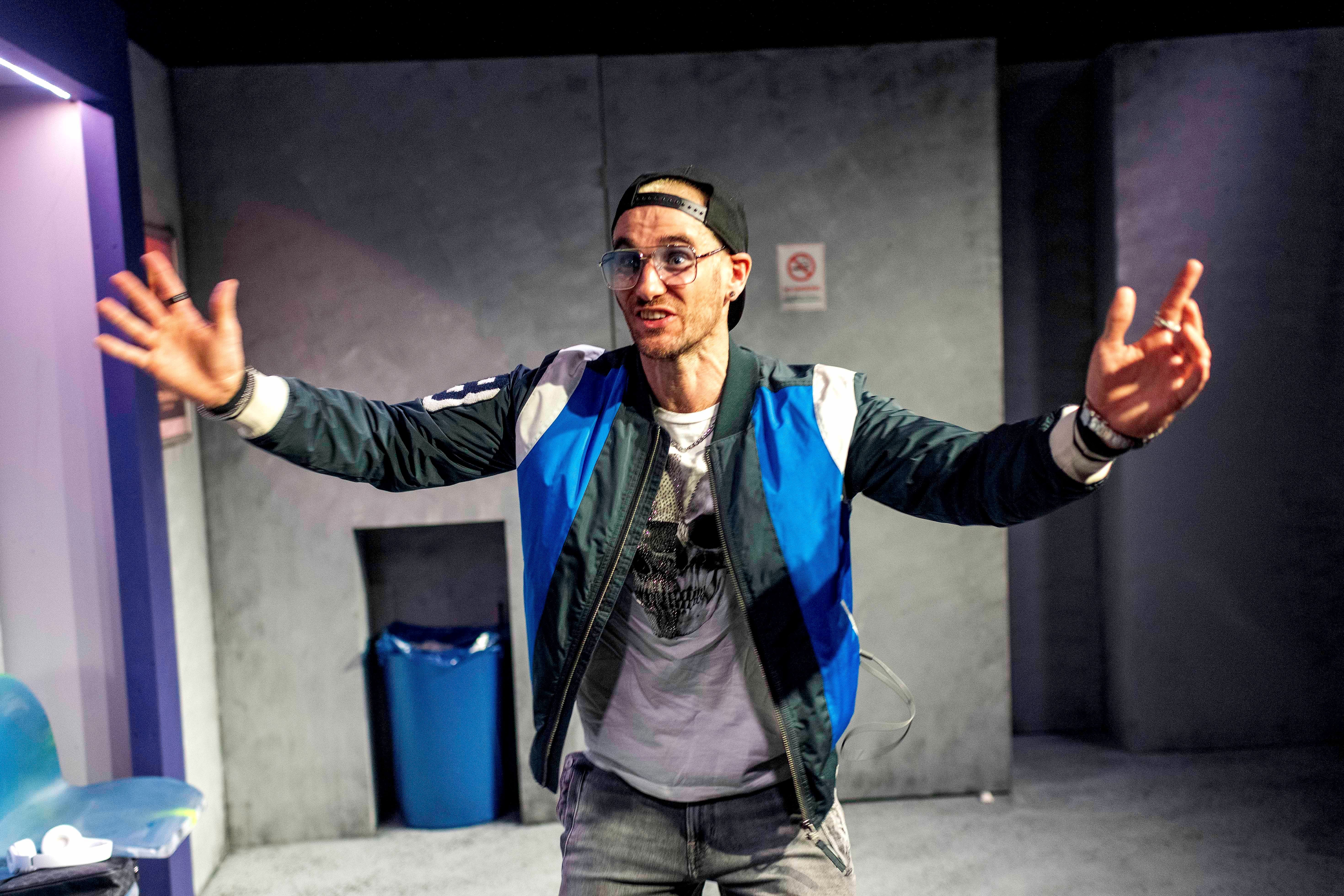
First performed in Glasgow in 2009, David Ireland’s debut play returns for a 2026 audience at the Finborough Theatre, but the text and the scene we’re immediately met with act as a late noughties time capsule. Eddie, played with a fantastically compelling brazenness by Martin, is slouched back in jacket, cap, and the kind of bedazzled skull t-shirt fortunately left largely forgotten to that era. To the consternation of the apparent stranger next to him, Jimmy (a wonderful performance of self-conscious affectation by Blaney), Eddie’s phone is ringing, the repeated South Park jingle not heard by the latter due to his headphones.
What follows is a clash of two, on the surface, wildly different characters, that are stripped efficiently and unflatteringly by the narrative, showing their matching cores as selfish and self-centred men who are desperate to get out of their circumstances.
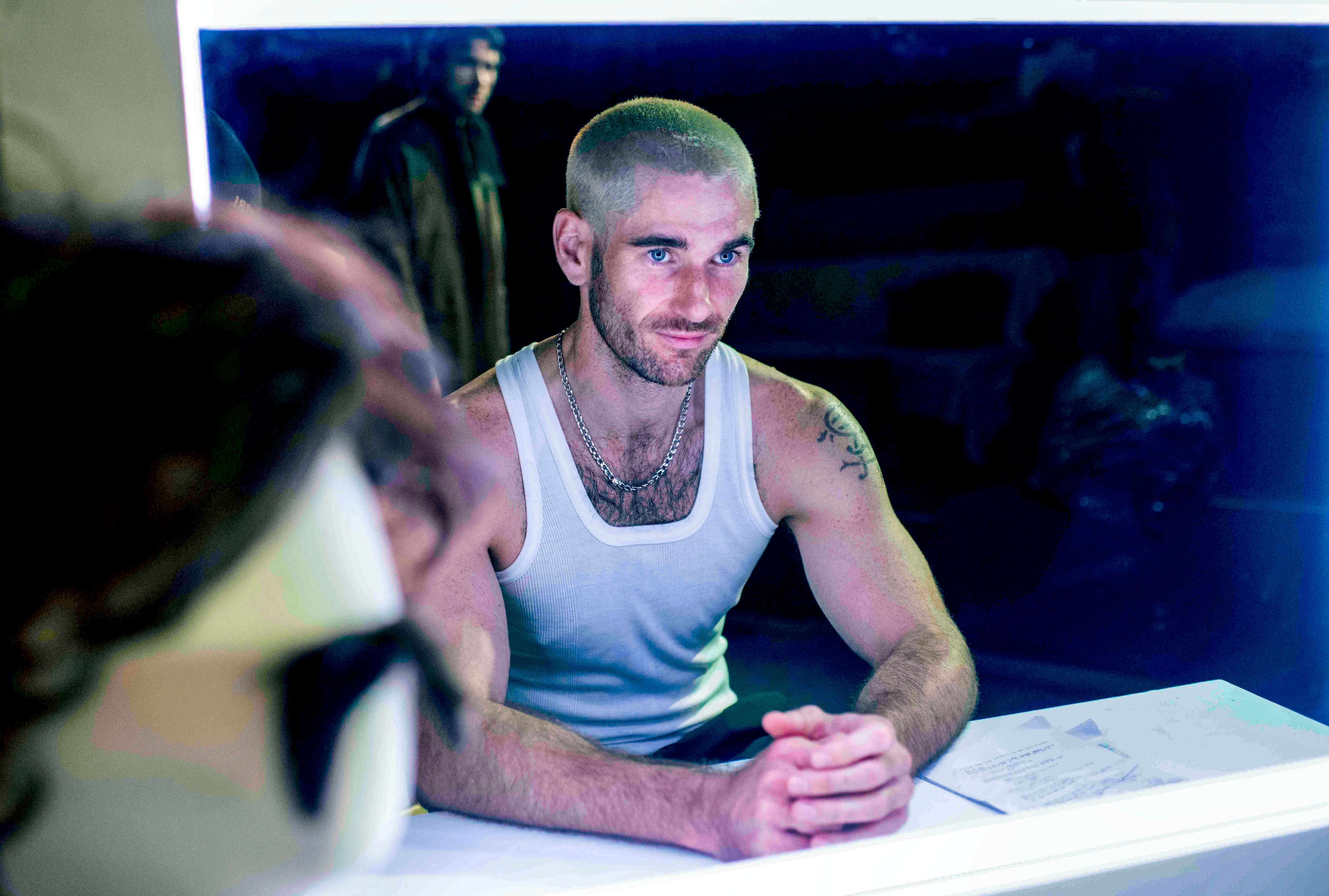
Burton’s staging is dynamic and revealing; the constant pursuit of Jimmy across the stage by an often oblivious Eddie is a fascinating physical conversation of dominance carrying on under the verbal. Neither character is likeable, but there’s a charm to Eddie’s openness, a child-like naivety to his crass behaviour and language, so he often comes across as clueless rather than cruel. However, his physical power as the more athletic of the two, as well as his social power as a famous footballer, are tensions Jimmy and the audience are constantly aware of.
Much of the humour lives in Eddie’s lines, Martin perfectly balancing the aforementioned lost boy demeanour with the threat of his words (and often body), generating empathy even as we are shocked by him. But plenty of the laughs come from Blaney’s expressive reactions and brilliantly pretentious deliveries. The second act’s performance of obsessive desperation, with Jimmy’s chasmic lack of self-actualisation having him recite Hamlet instead of his own words, is a masterful turn by Blaney, demonstrating the tatters of a carefully crafted persona around the fixated hunger, and making the free-fall incredibly funny.
Set designer Alex Marker, and, as already noted, costume designer Eleanor Landgrebe, achieve an impressively faithful depiction of the setting. Marker’s sets of ferry waiting room and film trailer are perfectly bleakly mundane; the promised glamour of both Eddie and Jimmy’s careers are nowhere to be found here. The glowing orange tourism poster and bright green graffiti catch the eye and act as subtle nods to the sectarian themes, without deviating from the naturalistic style. Though the sparkly skull shirt and noughties-footballer-accurate blonde buzzcut are certainly vibrant, Landgrebe continues the naturalistic choices. An echo of the poster, Jimmy’s orange scarf, is a nice touch, particularly as Jimmy gives the impression it’s slightly choking him.
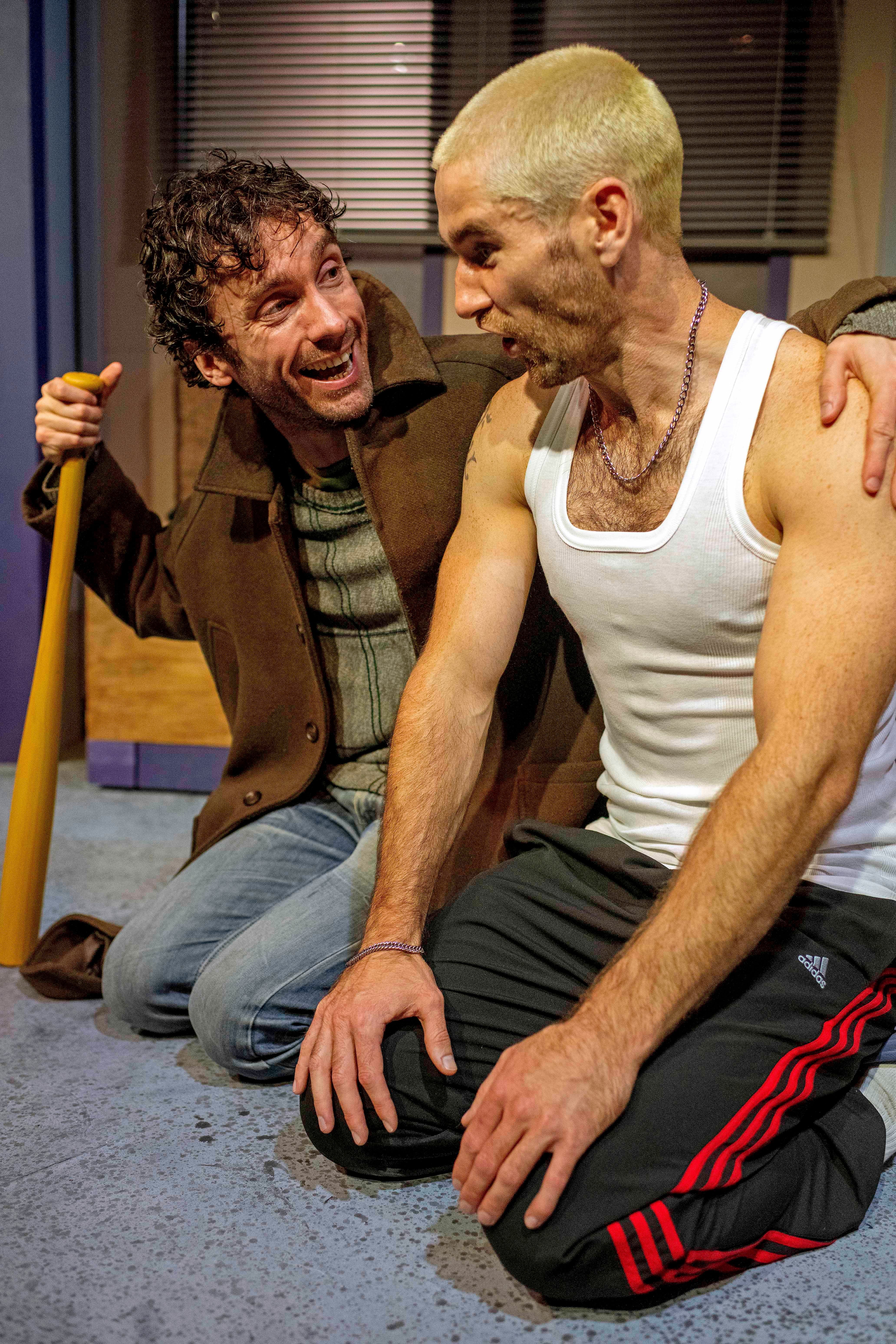
In fact, the production overall is committed to this naturalism. It’s appealing and works until the end of the play, when the building violence and obsessive behaviour cross into the realms of farcical. These final lines are played well by Blaney, but the stakes, that had been so well ratcheted up and dependent on our belief in the situation, feel removed when the final image of Jimmy isn’t too dissimilar from a Looney Tunes antagonist come a cropper.
But the big question, whether a play written and set in 2009 Glasgow can feel relevant to 2026 London, is a resounding yes. Sectarianism is still rearing its head in Glasgow and Northern Ireland, with attention over the summer on effigies and flags placed on Battle of the Boyne bonfires, and, at the time of writing, the stand-off between the Orange Order and Garvaghy Road residents (and the thousands attending rallies in support, particularly of the latter) reaching a seventh day. Meanwhile, across the UK and worldwide we’ve seen rising nationalism and tribal mentality, with algorithmic echo-chambers driving us-and-them narratives yet further. Eddie’s racist spiels feel like they might be plucked straight from the comment section on many social media apps.
Equally, Jimmy’s desire to be seen as morally correct and his attempts to rewrite his identity to better fit the narrative he presents to others is a sharp reflection of the “oppression olympics” often found in creative spheres. It detracts from important conversations about intersectionality to alleviate feelings of guilt in those who benefit from societal systems. He’s Irish now, not British, and has obviously always been a Celtics fan not Rangers. Most importantly, he holds his principles only as they benefit him. He will condemn Mel Gibson’s anti-semitism and simultaneously be desperate to even meet the man. In an increasingly surveilled world, where fame feels one viral video away and consumer choice is often presented as a moral vote, the dichotomy of single-minded ambition and self-conscious performance is deeply relevant and either reassuring or horribly foreshadowing to see preserved from 2009.
Wickedly funny and strikingly resonant, What The Animals Say is still fresh after 17 years.
🎭