
Picasso Pablo Ruiz – Spanish poet
who dabbled in painting, drawing
and sculpture.
– Picasso (1971)
At the beginning of Desire Caught by the Tail a character called Big Foot steps on stage and says, “Onion, stop being funny; now we are well feasted and ready to tell the four primary truths.” The Onion is also a character. We never find out what these truths are, incidentally. Next to speak is a character called Round Piece who says, “Just a moment.” Enter the Tart who is Big Foot’s love interest. Next, Fat Anxiety, Thin Anxiety and Silence appear. A bit later the characters’ feet have lines of their own. The Curtains – the stage curtains – too is a character with lines to speak. The characters discuss how to get warmth and food, while Big Foot and The Tart speak of sex.
This is one strange play. At first sight, it’s a series of actions with no apparent plot. But that doesn’t mean there is no motif. In fact it was written in 1941 when Nazi-occupied Paris was suffering a rough and grinding occupation where heat and food were at a premium. The names now make sense: Fat Anxiety and Thin Anxiety symbolise the twin fears of starvation and emotional deprivation. Silence represents the Occupation’s curtailing of free speech. There was indeed theatre despite the censorship, but it was mainly bland productions of musicals and classical French theatre. On the fringe there was also Resistance theatre performed at great risk to performers and audiences. One of the most risqué was Desire Caught by the Tail. The playwright was none other than artist-turned playwright Pablo Picasso, whom the Gestapo were keeping a keen eye on. Despite this, in 1944 Picasso and his friends decided to stage a secret reading in an apartment overlooking the Seine.
Desire Caught by the Tail is an extraordinary play. Picasso takes all his genius at manipulating shape, colour, texture and emotions in his paintings and pours it into his writing, painting with words instead of colour. The play seems to belong to the Theatre of the Absurd but it’s way ahead of its time, two decades in advance. Its absurdity, its bewildering characters, its defiance, its outrageous stage directions, flew in the face of the accepted behaviour demanded by the Nazi occupiers of Paris. Today it flies in the face of the outrageous attempts populist governments are making to curtail our freedoms. The 1944 reading had to be clandestine. I’m continually struck by the free-wheeling pace of Desire Caught by the Tail and the way its absurdities mirror the world in which we live.
It’s time for an independent theatre to pick up this wacky, irreverent play that turns everything on its head. Created by Picasso himself, it’s surely time that Desire Caught by the Tail had another airing.
After all, theatre has always been subversive and seen as a threat to the establishment. In Shakespeare’s day actors were seen as the lowest of the low. Many of Shakespeare’s plays were satirical or critical commentaries on events of the day, disguised by being set in the past.
Today independent theatre and plays offering any kind of challenge to the establishment are under threat. Independent theatres are closing while Arts Council funding is radically reduced and restricted almost entirely to established venues and companies, making it harder and harder for the plays of first-time playwrights ever to see the light of day. Meanwhile the political and cultural sphere is increasingly hostile to the kind of work that challenges and disturbs.
There’s a steep decline in new writing commissions. It’s become virtually impossible for a first-time playwright – or any non-established playwright – to have a play put on.
In fact it’s difficult to have original plays of any sort put on. The cuts in public spending have meant that theatres cannot afford a box office flop. There is still an audience but theatres prefer to play safe, staging classics and musicals and plays starring famous faces. The rot really set in under Covid.
The situation is nothing like as dire as it was under the Nazi Occupation of Paris. There performances went on, but had to be in line with the curfew which ran from 11pm to 5am. Large gatherings of any sort were banned and a knock on the door was greeted with dread. But this sparked not fear but defiance in the city’s art and intellectual circles.
One of the greatest examples of a playwright thumbing his nose at the establishment was Picasso and his subversive, scurrilous, satirical play reflecting the madness and hardships of the times. The intellectuals of Paris, among the greatest minds of the century – Sartre, de Beauvoir and Camus – gathered in secret to give it a reading.
So what was Picasso’s secret play all about?
Desire Caught by the Tail: The Play
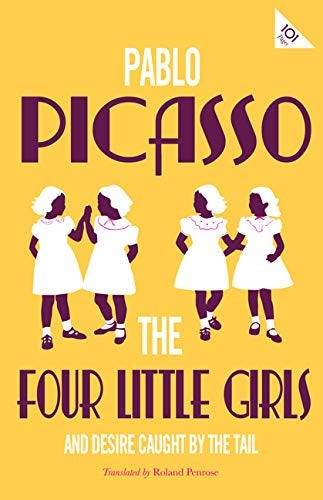
On 19 March 1944 a hundred and thirty people gathered in a crowded apartment overlooking the Seine for the reading of a play by the city’s most renowned artist. Desire Caught by the Tail revolves around hunger, cold and discomfort, experiences all too familiar in Occupied Paris.
Picasso’s friend and confidant the ethnographer and writer Michel Leiris wrote that Picasso “was an insatiable player with words [who, like] James Joyce…in his Finnegans Wake…displayed an equal capacity to promote language as a real thing (one might say)…and use it with such dazzling liberty.”
His play incorporated his own version of surrealism, a Dadaist nihilism that embraced chaos, absurdity, and nonsense, all antithetical to Nazi beliefs. In January 1941, in bed with a cold, he wrote Desire Caught by the Tail in three days.
Big Foot is Picasso himself. The Tart is Big Foot’s love interest whose name makes her either – or both – a luxury pastry difficult to come by due to rationing, or a prostitute. Her Cousin symbolises domestic discord. The Onion symbolises the peeling away of reality to reveal truth. Round Piece is a geometrical figure bringing a physical shape to scenes in which the action is fragmenting. The Two Bow Wows fill out the surreal landscape. Thin Anxiety and Fat Anxiety symbolise the twin fears of starvation and emotional deprivation, and both are in love with Big Foot. Silence is a personification of the Occupation’s curtailing of free speech. And The Curtains turn stage boundaries into a character and symbolise being trapped by the Occupation.
The play has two great themes: the hunger and cold everyone suffered in occupied Paris and the poignant desire of the two main characters – Big Foot and The Tart – to be alone, creative, make love and not be hungry. All the characters moan about their situation and their frostbitten feet and even the feet have dialogue. “My chilblains, my chilblains, my chilblains,” they complain. The setting is the less than salubrious Sordid’s Hotel.
Most of the stage directions are surreal and absurd and require a lot of imagination to actually carry out. After the feet complain about frostbite, “The transparent doors [of the hotel rooms] light up, and the dancing shadows of five monkeys eating carrots appear.” In Act Five, Scene 1, Big Foot and The Tart have athletic sex on stage, after which the stage directions read, “She squats in front of the prompter’s box and, facing the audience, pisses and pisses scalding hot for a good ten minutes.” The next stage direction for The Tart is, “She farts, she farts again, she tidies her hair, sits down on the floor and begins a clever demolition of her toes.”1
The characters can’t stop talking about warmth, comfort and food. The Tart’s cousin says: “I have already put some coal on, just recently, but it doesn’t heat up. What a bloody bore.” Then The Tart finds a bar of soap and is ecstatic: “How good this soap smells – oh, how good it smells.”
In her own mind she’s made up of food: “I have 600 litres of milk in my breasts. Some ham. Some streaky bacon. Some liver sausage. Some tripe. Some blood sausage. And my hair covered with chipolatas. I have mauve gums, sugar in my urine and egg white all over my hands….And lips twisted with honey and marshmallows….I am a mother and perfect whore, and I can dance the rumba.”
Big Foot bemoans that he would like to offer The Tart tea, but there is no running water, no sugar, no cup and saucer, no bread or jam. But, he goes on, “despite the dark times we are suffering….Here is page 380,000 of my book which appears to be seriously of interest.” He proceeds to read from it.
The play ends with a patriotic speech from Big Foot: “Let us wrap the worn-out sheets in the face-powder of angels and turn the mattresses inside out in the brambles. Light all the lanterns. Throw flights of doves with all our strength against the bullets and lock securely the houses demolished by bombs.” Surreal though it is, it’s an unmistakable call to the ramparts.
Three years after Picasso wrote his play, Michel Leiris suggested a private reading in his spacious Parisian apartment.
🎭
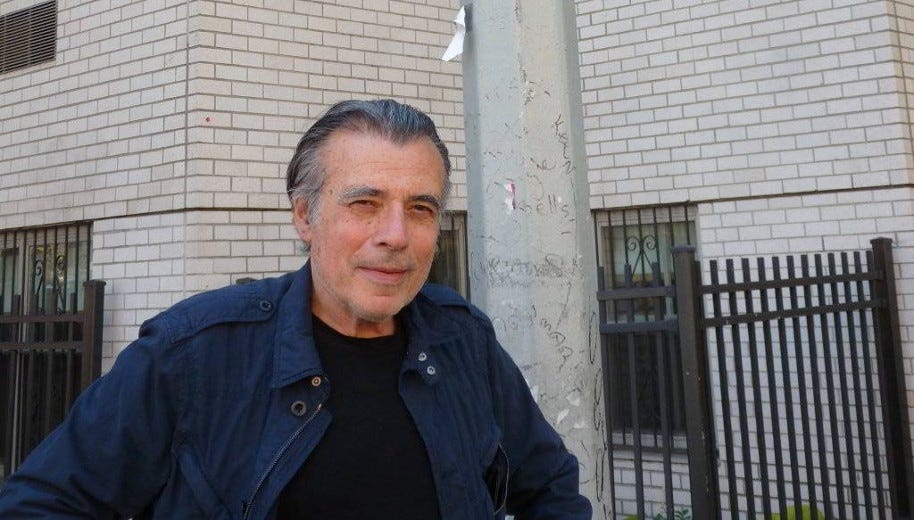
Arthur I. Miller is a playwright, author and Professor Emeritus of the History and Philosophy of Science at University College London. He is fascinated by drama, art, science and their relationship and particularly by Picasso. His book Einstein, Picasso: Space, Time, and the Beauty that Causes Havoc was nominated for the Pulitzer Prize in 2001. His recent play, Synchronicity, recreates the intriguing encounters between Carl Jung and the physicist Wolfgang Pauli. It had successful readings in New York in 2023 and was performed at the White Bear Theatre, London, in 2024 and 2025 and at the International Symposium on Theatre about Science in Coimbra, Portugal, in 2025. He is currently working on other plays revolving around science. For more see arthurimiller.com.
All quotes from Picasso’s play are from Pablo Picasso, The Four Little Girls and Desire Caught by the Tail (Alma Classics Ltd, 2019), translated by Roland Penrose.