

The Phoenix Arts Club, in London’s West End, is not a theatre. There is no set, no costume, no role waiting in the wings. This is where George Crawford stood up for his first mic night. He only agreed to it because someone asked him.
“I thought it was going to be mostly family and friends coming to support me: my mum, my stepdad and a couple of people from Legally Blonde. Everyone else were people who had paid to come and see me, and it sold out. It was really special.”
Currently he is playing the part of Emmett Forrest in Legally Blonde, on its UK and Ireland tour. The musical is inspired by the 2001 film: Elle Woods, a fashion-loving sorority girl, follows her ex-boyfriend to Harvard Law School and proves everyone wrong. Emmett is the kind, hard-working law student who believes in her before anyone else does.
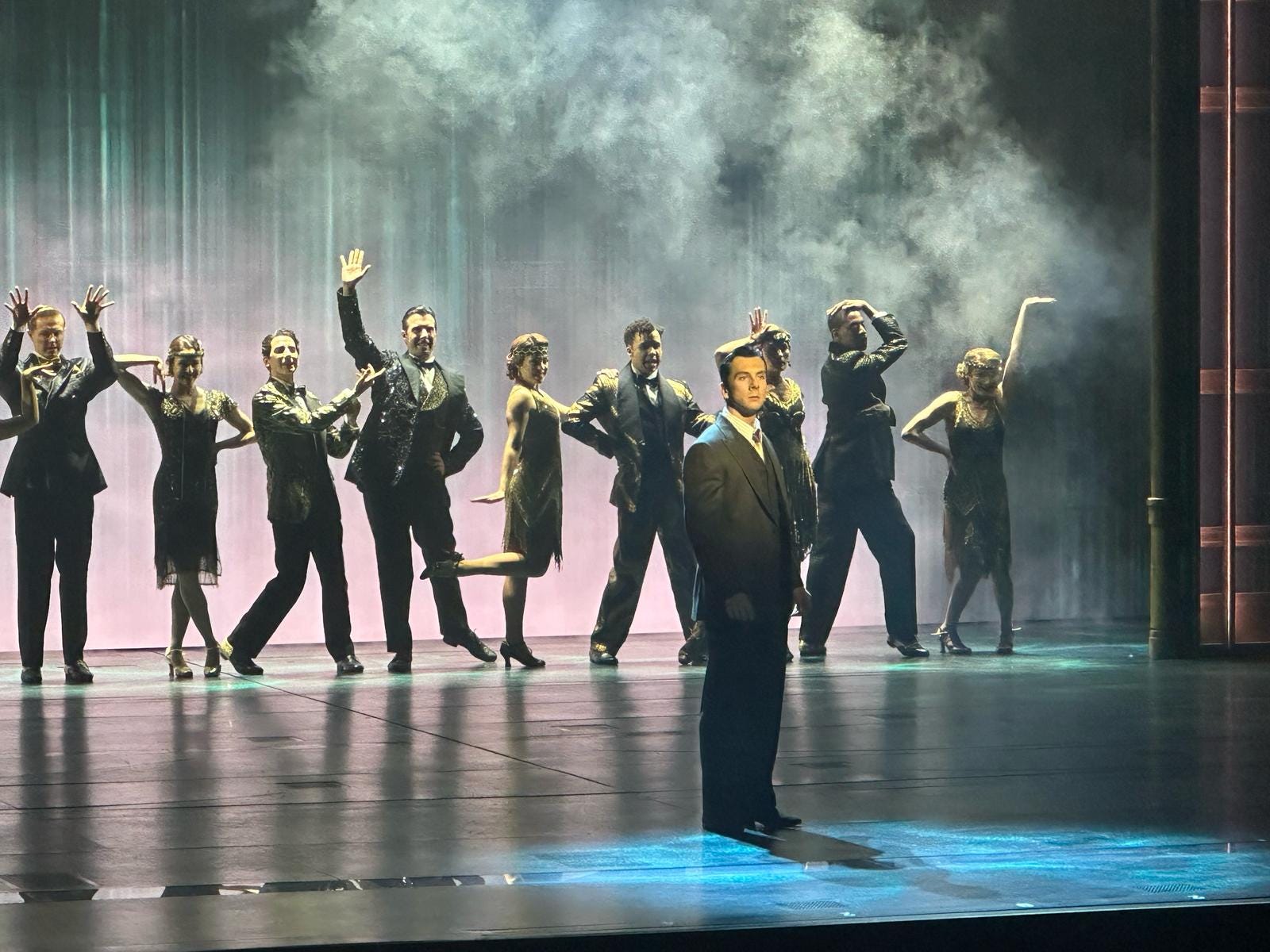
George trained at ArtsEd in London. He has performed in Waitress and in The Great Gatsby at the London Coliseum. But it was Newsies that gave him the role he loves most: Jack Kelly, the lead, which he played as the alternate. Jack’s song, ‘Santa Fe,’ has become an integral part of who he is as a performer.
A mic night is different from a show. People go to a production for the whole experience.
“When you’re on stage, you’re a character. People aren’t expecting George. They’re expecting Emmett. I think people love mic nights because they let you peep behind the curtain and see who a performer really is, rather than a character.”
Songs are associated with roles. Yet they do exist as singular musical expressions.
“If the character doesn’t know they’re singing, there shouldn’t be any awareness of singing. You’re speaking, and the words aren’t enough anymore. You can’t get the emotion out, so it leads into a song. And when you can’t sing anymore, it leads into dance. I think it’s really important to always lead with the acting. Otherwise it becomes a self-indulgent kind of performance, instead of one that’s for the audience.”
The Phoenix did not ask for his stage persona. It asked for the man.
“Personally, I’d find it a bit strange if I went to a gig and someone gave a full-out performance of songs from shows they’d been in. So you have to find a level playing field. I’m George, with a hint of the character.”
There was one exception.
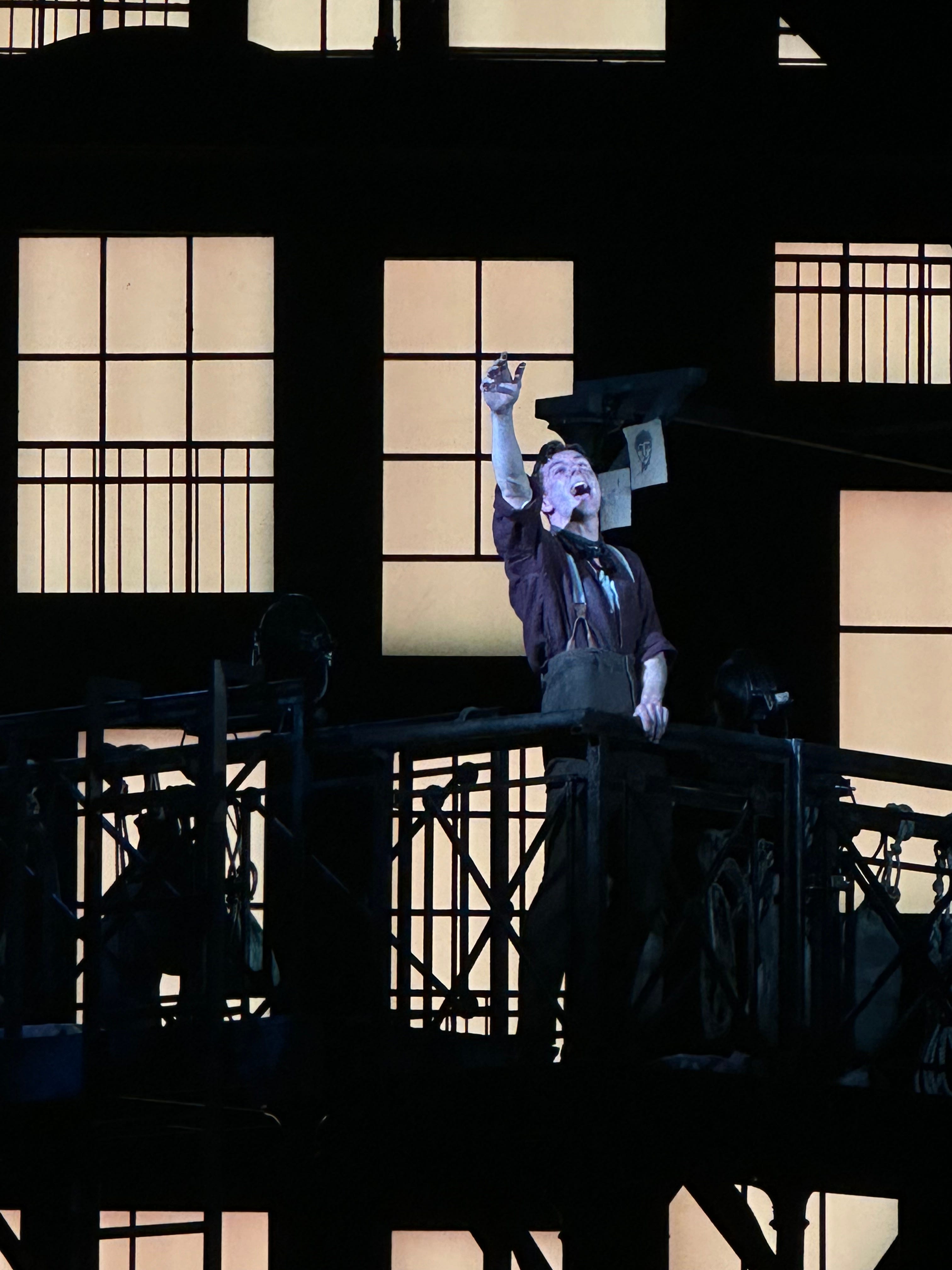
“There was only one song where I fell into a kind of performance, and that’s ‘Santa Fe,’ every time I sing it. It was a dream role, and I got to play it on Thursdays. Everything just goes quiet. I love it.”
He sang a duet with his wife, Aimée Fisher, who is a performer herself.
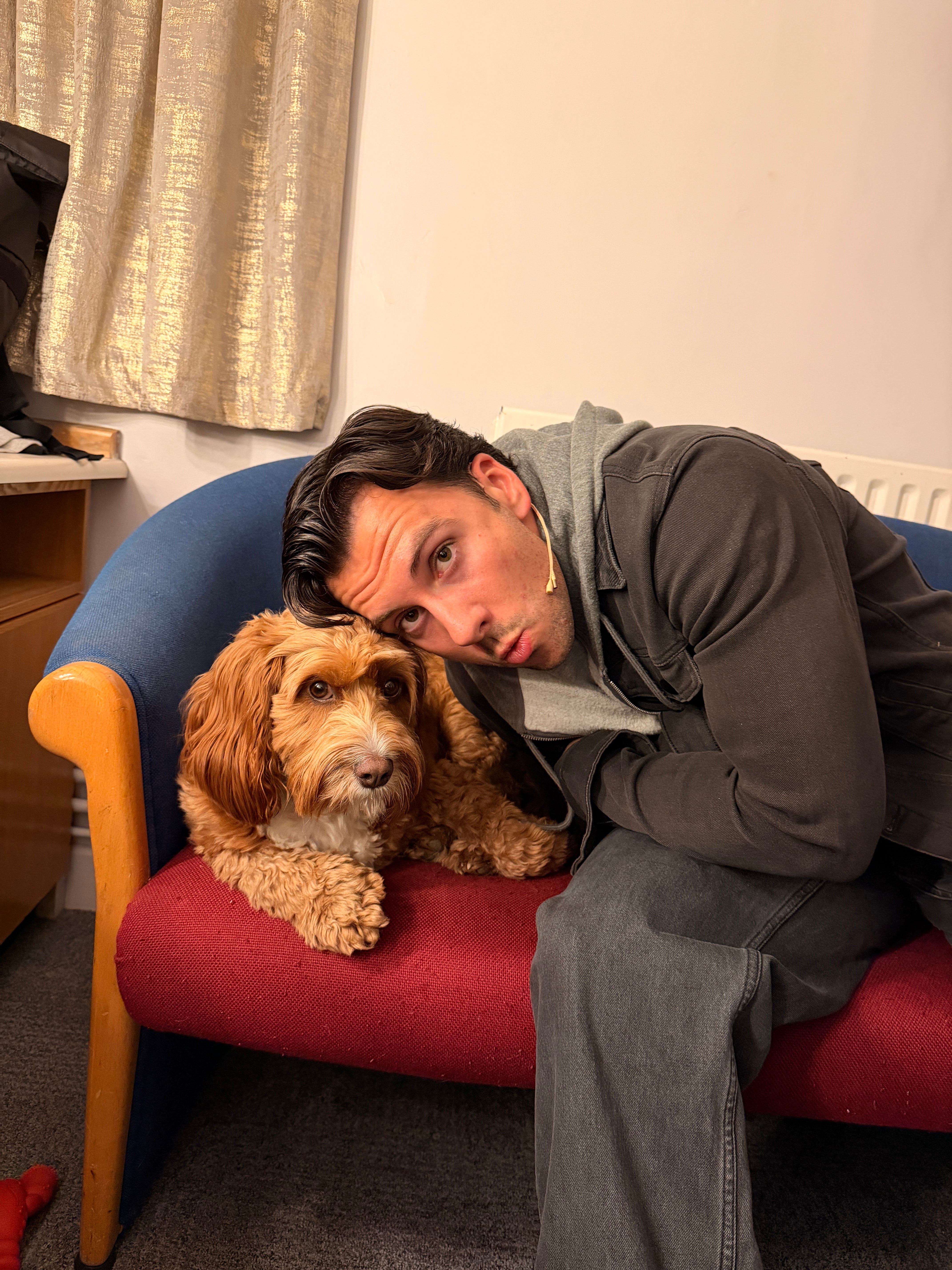
“We sang ‘Lucky,’ by Jason Mraz. It’s never going to be in a show, and it will probably never be sung again, but people got to hear something they wouldn’t have heard otherwise. What was nice about a night like that was being able to be myself, be a bit silly and sing some songs, with people there for me, not for a show I’m in.”
His mum was in the audience that night. Though long before, she had been on stage herself.
“My family were heavily involved in amateur dramatics. It was a real family affair. My mum and dad would play the romantic leads, my dad’s mum, my nana, would choreograph, and my mum’s dad would direct. So I was born into it, and it was completely normal to me. It’s all I’ve ever known. I was so surrounded by art, music and performance that it felt natural for it to become my career. And it’s very nice to have such a supportive circle, people who said: ‘If this is what you want to do, we absolutely support you.’”
The family moved from Manchester to Yorkshire when he was six. At school, he put it to one side.
“My high school specialised in sport, science and maths. GCSE Drama sometimes felt like a babysitting lesson, where some people saw it as the one hour they could just mess around. So I put performing on the back shelf for a while.”
College changed that.
“I went to a performing arts college and saw so many people who really wanted to be there. You were never laughed at for having an idea or for wanting to be creative. It completely re-sparked my love for theatre.”
Three years at ArtsEd, in London, sealed it.
But training is one thing; the real lessons live outside it.
“Every step of my training only allows you to get so far. It doesn’t have all the answers. A lot of those teachers have techniques and ideas that worked in the industry when they were at their peak. When you actually get into the industry, you realise how much more learning you have to do.”
What he has gathered since is reflected in his work.
“The first thing I do is read the script like a book, without any association to my part, so I can see how it flows as a piece of writing. After that, I read it from my character’s perspective, and I look at each scene I’m in and ask: what is he trying to achieve here?”
It’s not just about your role. It’s about how you fit into the narrative, and that demands complete immersion.
“If I just got a script and thought: where are my lines? Okay, here they are, that’s all I have to do, fine. Then I wouldn’t get a full understanding of the piece as a whole.”
However, to know from the start how events will unfold is a risk in itself.
“In my first scene, I don’t know what’s going to happen by the bows. So I try to be as present as I can in each scene, instead of thinking: well, I already know I’m going to end up in a good relationship with Elle. That’s not being truthful.”
True discoveries thrive in rehearsal rooms.
“My favourite part is getting on my feet and starting to play. That’s when I’m at my most creative and the best ideas happen. There’s only so much you can do at home.”
His current director in Legally Blonde, Nikolai Foster, is known for giving his cast that freedom.
“It felt like we had six weeks of rehearsals because of the space he gave us. You’d say: ‘I was thinking I might try that.’ And he’d say: ‘Just try it and see what happens. If it lands, we keep it. If it doesn’t, it doesn’t matter.’ That is the best kind of room you can ever be in. It’s how I felt when I was younger, aspiring to be in this industry: the uninhibited, creative, inquisitive child comes out to play, and the director says: ‘Keep that.’”
Rushing has no place before each and every performance. His first part taught him this. He was Ogie, a comic supporting role in Waitress, a musical set in a small-town American diner.
“He’s not on stage for the first 45 minutes. At the first performance of Waitress, the show had just started and I was already changed, mic on, costume on, sitting there ready to go. By the time I got on, my adrenaline was so high I felt like: what’s going on?”
This needed to change. And then came advice from Sir Trevor Nunn, co-director of Les Misérables, passed on to him by Matt Cole, his director on Newsies.
“Trevor Nunn said that if you just say your first line, the one you say as you walk on stage, and leave it at that, everything else will naturally follow. So I go to the side of the stage, get my things ready, say my first line, and that’s it. If I start overthinking what comes next, I’m not present. I’m already thinking about something that’s going to happen an hour from now.”

In spite of all that dedication, he approaches the work lightly. When he is asked what he brings to the stage, he laughs.
“A bit of cheekiness. And reminding ourselves, even while we’re doing a show, that it’s just a show. It doesn’t matter. It’s really fun. We get to engage, communicate, work opposite someone and be creative. And when things get tricky or go wrong on stage, having a glint in your eye that says: ‘Don’t worry, it really doesn’t matter.’”
It is the ability to take it all in your stride that keeps the energy alive.
“When you’re doing the same show day in, day out, you have to find ways to keep it engaging for the audience, but also for yourselves, without the audience ever knowing anything is different. Someone’s wig is on a bit funny, or something’s happened with their shoe. I love it when something goes wrong. And now we’ve got dogs on stage (in Legally Blonde), and they’re so unpredictable.”
But there is a fine line between keeping it light and turning it into a joke, which mustn’t be crossed.
“There’s nothing worse than watching a show where you can see people messing around. There is an art to being a bit cheeky and having a laugh without the audience knowing. And if you can’t do it, you shouldn’t do it.”
The balance is crucial.
“While we still have fun and have a laugh, it’s really important that we tell stories with conviction and truth. Legally Blonde is a really good example. It’s all fun, high energy, very pink, very loud. Then there’s one moment where everything comes down. It’s very truthful, and very difficult to watch. A man in the show takes advantage of Elle, and because she doesn’t act on it, he says: ‘Well, I’m going to fire you then.’ I think that’s very relatable, in the performing industry and the arts, but also in many workplaces around the world.”
Many plays and musicals abound in these complex and delicate themes.
“In Waitress, the lead character is in an abusive relationship, more verbal and gaslighting than physical. People have shared their own experiences with us: ‘I came to watch the show, and it made me realise what kind of relationship I was in. Something I probably knew, but was too scared to let myself think about. It allowed me to get out of that relationship, and I’m now in a very happy, stable place.’ That is why a lot of us perform. It’s our job, but for so many people it’s so much more than that.”
For the audience, it’s a reckoning with their own lives.
“To be able to say we played a small part in helping someone, potentially changing a life, is very special. But I don’t want to make a statement that we’re changing lives because we’re doing a show.”
No show is ever made alone. Watching others is an education in itself. In doing so, he has discovered what kind of cast member he wishes to be.
“Honestly, I think you learn the most from the people who get it wrong. The ones who are a bit rude, inappropriate or impolite. You think: that’s everything I don’t want to be as a performer. I find those lessons more useful.”
Others showed him how it should be done. On the Waitress tour, it was his co-star David Hunter, now starring in Beetlejuice in the West End.
“Something happened on stage; it was nearly a bad accident. He brought everyone into the green room together and said: ‘Tonight’s show isn’t going to go ahead until the right steps have been put in place to make sure everyone feels safe.’ He wasn’t giving attitude. He wasn’t being rude. He simply said it was really important that, as a company, everyone felt safe. I remember taking a mental picture and putting it in my back pocket. If there’s ever a situation where someone needs to step up, that’s exactly how you do it.”
Top billing brings its own unspoken duty.
“When you have the opportunity to be the leading man or the leading lady, you’re also the leading member of a company, making sure people feel there’s a voice that can speak for everyone. That’s not written in any contract.”
Everyone deserves respect. Whatever your job.
“It doesn’t matter what size your role is. Crew, ensemble, musical director: we’re all human beings, here putting on a show. It’s so important to lead from kindness, whether you’re the lead, a dresser or a cleaner.”
Even the biggest names on the poster are ordinary people deep down. In The Great Gatsby, Aimée, his wife, found herself working alongside one of the West End’s best-loved leading ladies.
“Aimée had looked up to Rachel Tucker for most of her performing life. And then we became best mates with Rachel. Because she’s not Rachel Tucker. She’s just Rachel. People say: ‘Oh my god, you’re in a show with that person! What are they like?’ And they’re fine. They’re normal.”
But having a name doesn’t guarantee stardom. An actor’s life doesn’t come with perks. The day before Legally Blonde was due to start at the Edinburgh Playhouse, George was on the move.
“I was lugging my suitcase from Chiswick on the Tube to King’s Cross, onto the train to Edinburgh, then up a hill and four flights of stairs to my digs. That’s the reality of being a performer sometimes. I think people imagine there’s a lot more glamour to what we do.”
The spotlight is ephemeral.
“I’m actually not that stagey. I love what I do. I love doing theatre, and I love watching and supporting my friends. But I don’t come home and put on a new musical soundtrack. I love being able to leave work at work, come home and talk about absolutely anything other than theatre. It’s really important not to let it become your whole life.”
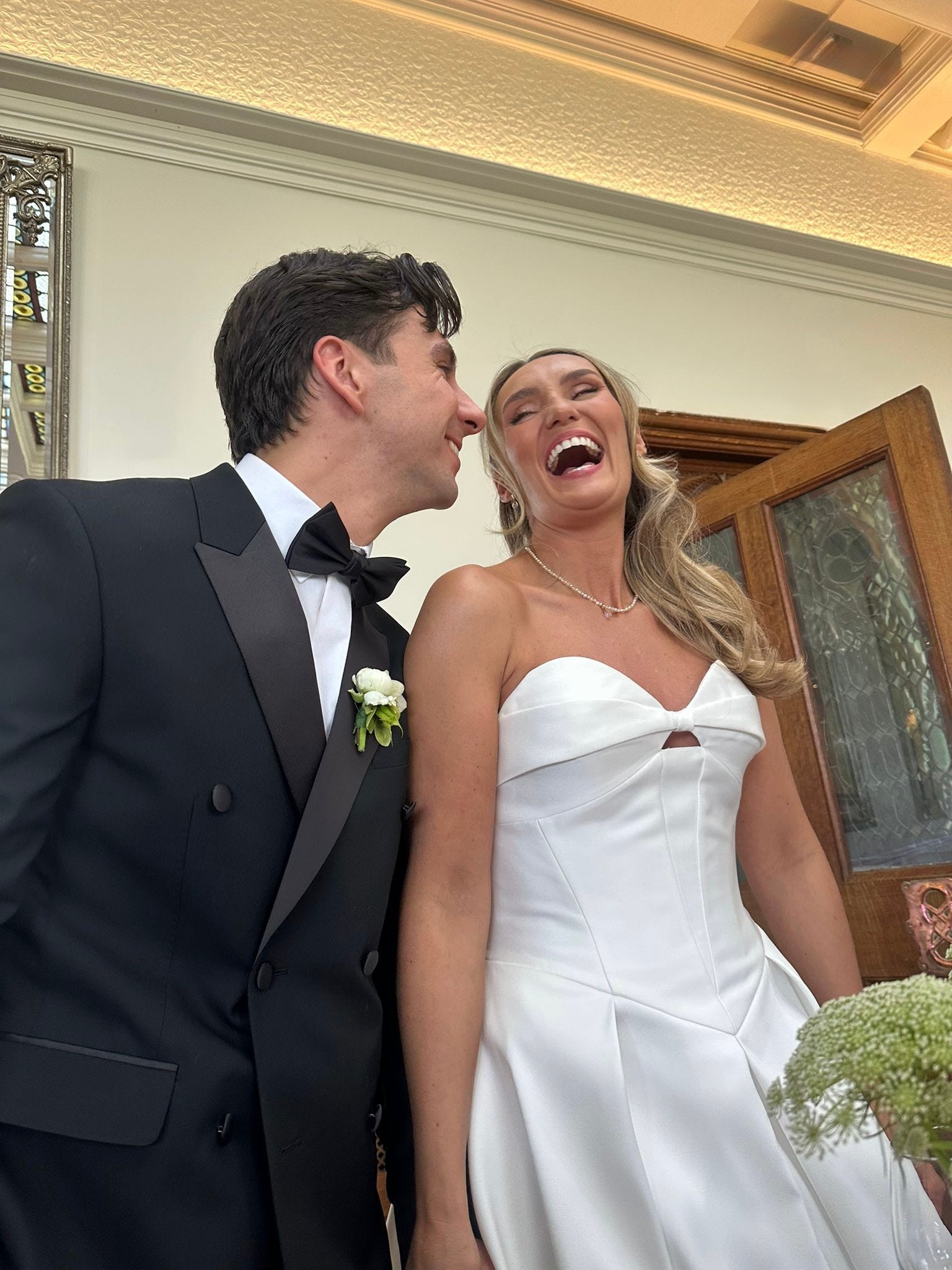
George and Aimée married recently, and he has thought long and hard about what matters. He even said it out loud, in front of family and friends, at a very important moment.
“Weirdly, I actually spoke about this in my wedding speech. Being a performer isn’t my purpose. It’s something I really enjoy and I’m okay at, but I want to be a really good husband and a really good dad. That is my thing.”
🎭